Digital Marketing Trends & Predictions for 2026
2025 was a year of contradictions.
While online innovations multiplied faster than ever, there was an undeniable pull in the opposite direction. As efficiency and automation became part of our digital routines, the desire to slow down in real life grew. Simply put: tech is speeding everything up while culture is trying to slow down.
While we—using that pronoun generally—were using AI for everything from email drafting to recipes to relationship advice, we also saw new cultural buzzwords emerge, like “deinfluencing,” “underconsumption,” and “intentional living.” In the past year, consumers have dealt with privacy changes, battled ever-shortening attention spans, and navigated rapidly shifting platform algorithms. In response, one word kept resurfacing across culture and commerce alike: intentional—spend intentionally, decorate intentionally, be intentional with your time, your money, your attention.
So—what does this mean for marketing?
As marketers, we are acutely aware of the need to move fast: capture attention quickly, communicate clearly, and drive action—whether that’s a click, a signup, or a sale. At the same time, we’re being told—rightfully so—that our messaging and branding must be authentic, human, and aligned with values that prioritize meaning over noise. How do we attempt to bridge these two ideas that seem at odds with each other? When you boil it down, it’s fast versus slow.
And yet, the brands that are winning aren’t choosing one or the other.
If you or your brand have been caught between moving fast and moving intentionally, let’s simplify it. Before you jump into the new year, take a pause with us and let’s review what’s in—and what’s out—in digital marketing for 2026.
In: Performance-First Marketing
Gone are the days when broad, one-size-fits-all advertising delivered meaningful results.
Today’s most effective marketing is performance-first, meaning it is results-driven and designed to generate measurable actions, such as leads, purchases, bookings, or sign-ups. Rather than prioritizing reach just to get more eyes on it, performance-first marketing focuses on what actually moves the business forward and keeps the lights on.
This approach prioritizes results over reach, ensuring ads are delivered to the right people, with the right message, and at the right time. Every consumer has a specific pain point, need, or desire, and performance-first advertising is built to address that problem directly. This will also position your brand or product as the solution to their problem.
To do this well, we must be intentional and strategic about what our ads show and say. Visuals are critical for stopping the scroll, but messaging is what creates connection and drives action. A pretty image only takes you so far, and if your messaging is off, you will confuse your audience. Strong performance marketing speaks directly to a clearly defined audience instead of casting a wide net and hoping something resonates. When an ad feels like it was “made just for me,” it’s far more likely to convert.
This approach requires research and a deep understanding of your audience, who they are, what challenges they face, what motivates them, and where they are in their decision journey. Sure, this takes some time to figure out (not a day or even two days), but it leads to significantly stronger results: higher engagement, better conversion rates, and more efficient ad spend.
TLDR: Performance-first marketing prioritizes relevance over reach. By aligning your creative, messaging, and targeting with real audience pain points, your advertising becomes more impactful, measurable, and effective.
In: AEO (Answer Engine Optimization)
Search is evolving quickly, and Answer Engine Optimization (AEO) is quickly becoming the new normal. Platforms like Google, AI-powered search results, voice assistants, and tools like ChatGPT are increasingly designed to deliver direct answers instead of a long list of links. For example:
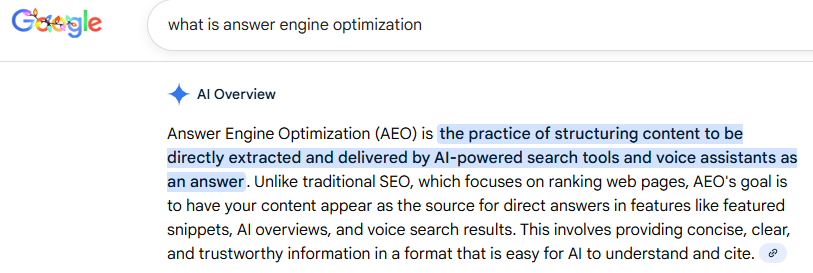
While this changes how users interact with search, it also creates a more convenient and efficient experience for them. AEO focuses on optimizing your content so it becomes the answer these platforms choose to surface. Rather than only ranking for keywords, the goal is to provide clear, structured, and authoritative responses to the exact question that the user asked.
In: Long-Form Video
For those who cannot refuse to forget their love of long YouTube videos—this one's for you—long (or, at least, longer) form video content is on the rise.
While we don’t predict seeing 30, 20, or even 10-minute videos in the ad world, we do see video content in the 3 to 5 minute range making a comeback. Up until now, it's been a good idea to keep video content under 30 seconds. There are instances where under the 60-second mark works, but there’s risk. So, why this change?
There are a few different reasons we can attribute to this, but one of the most important ones to note is simply that shallow content is dead. No matter how we feel (as consumers or marketers), audiences do have autonomy, and generally speaking, they are so over empty content. Long-form content is easier to make than before with new tools, plus it allows viewers to be pulled deeper into the funnel, which increases conversion rates, creates brand loyalty, and gives a brand more real estate to tell their story.
In: AI-Assisted Creative Workflows
Moving away from low-effort AI-generated content and evolving into smarter, strategy-focused, AI- supported systems.
AI exploded onto the scene this year. Although it’s been around in years past and maybe we’ve played with it a bit here and there, in 2025, it was everywhere. And more apparently, in our workplaces. Now that the initial launch and adjustment period has passed, 2026 will bring automated workflows to another level.
Not to be mistaken—in 2026, AI will not be generating everything, or even be left to plug and play at its automated will with only AI-generated ads. However, we will be seeing a lot of AI-assistance, particularly to our creative workflows. Our team has found the use of AI in the ideation and concepting stages of creative useful. We believe AI isn’t the creative genius, our team is. AI helps us move faster, test more ideas, and find relevancy, but only we can bring the emotion and authenticity that make those ideas convert.
That ability to use AI to cross-reference, research, and scrape the internet for relevant information is a tool that, when used with existing critical thinking and creativity, can propel your team into efficiency that’s both sustainable and inspiring—two irreplaceable keys in having a successful team.
Out: Gimmicky Hooks
You’ve all seen the routine “Stop scrolling!” hooks on TikTok, Instagram, and Facebook, and it makes you want to do anything but stop scrolling. It’s a cheap way to hook users in, and has nothing to do with what your brand or product is about. This leads to people having to sit and wait to hear about your product and how it will help them, and by the time that happens, they’ve already scrolled!
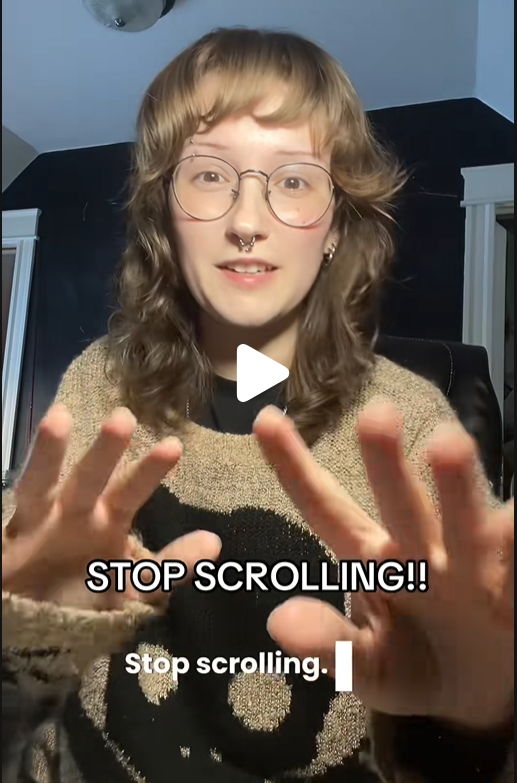
We recommend a hook that instantly calls out the pain point of your audience, then introduces how that product can immediately solve this problem. In almost all cases, we highly recommend that this be addressed as soon as possible (within the first 3 seconds, ideally). Strategic hooks will always beat out ones that could be copied + pasted on any ad.
Out: Creative as Fulfillment
Creative isn’t an afterthought—it’s the brainchild of strategy, built with a specific job, audience, and outcome in mind.
Not to say that creative was ever just fulfillment, but things used to operate in a much more linear, handoff-based way. Often creative—or for a long time, only graphic design static ads or more traditional commercial style—was what came after strategy, rather than the mechanism that actually delivered it. But now, strategy must be at the center of marketing creative. There’s strategy in the ideation stages of ad creation, but there’s also strategy in the after. Being able to analyze performance data post-launch and iterate creative based on that will level up your game. But, none of this is possible without a deep understanding of the ad strategy through the creative lens.
Strategy happens before creative—not after. We have to move on from asking “what should this ad look like,” and on to the better question, “what job does this creative need to do?” There are so many opportunities to create converting ads when you approach your creative with strategy. Then, and only then, should you consider what your creative is going to “look like.”
Out: Static, one-touch conversion paths
Having to rely on a single conversion action, like purchases or a form submission, for example, no longer tells us the full story of how a user got to that point. Today, a customer journey is never linear. People research, compare, leave, return, and interact with your brand, maybe multiple times, before converting. Because of this, tracking only one “final” conversion point limits your visibility on what could be happening before they get to their final decision.
Instead, the goal should be to track as many meaningful conversion touch points as possible. Yes, this would include things like add to cart events, product views, form starts, button clicks, etc. By opening up your conversion tracking, you gain a clearer understanding of how users move through your funnel, and it also helps you identify where prospects are engaging or dropping off.
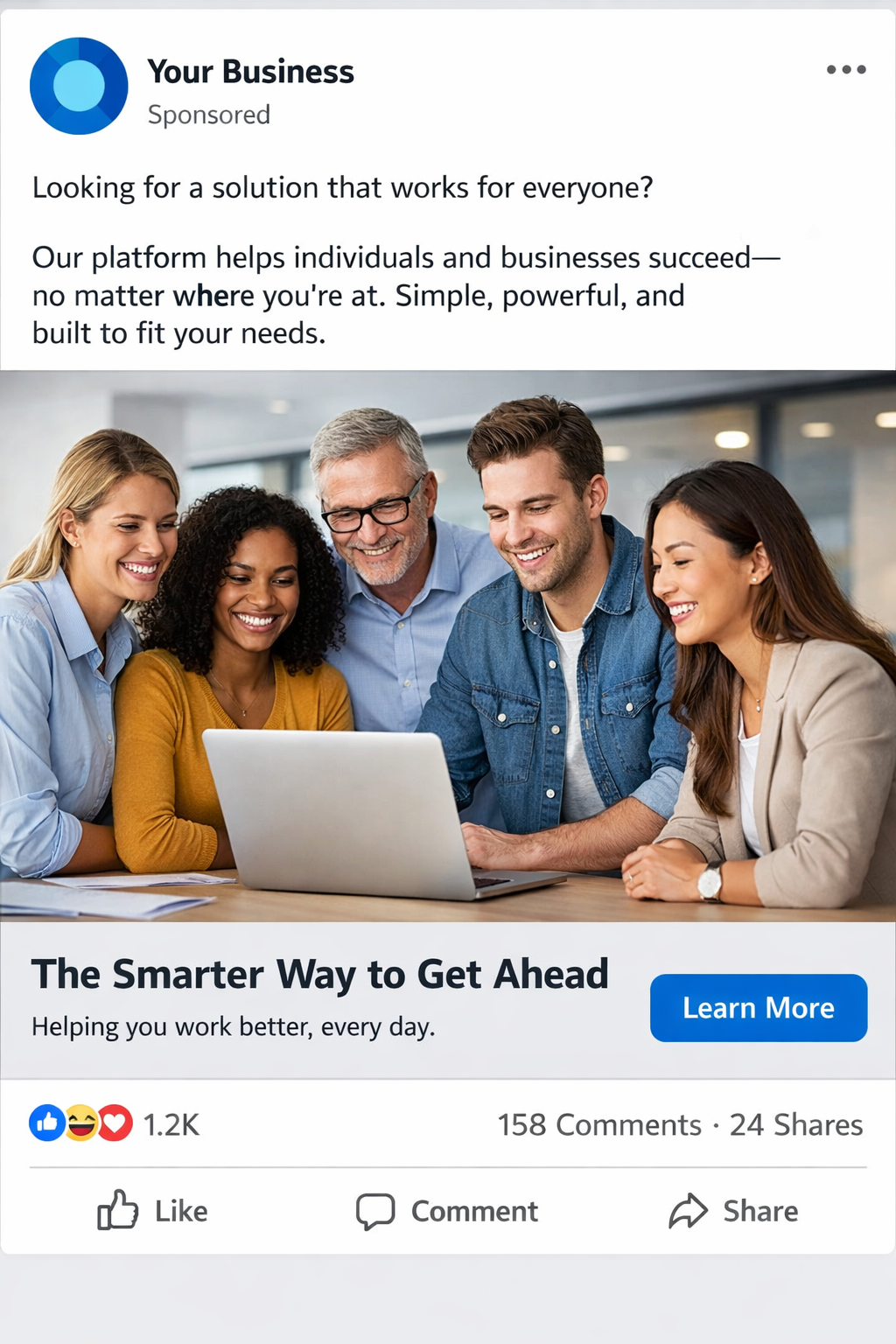
Out: Marketing to Everyone
When you talk to everyone, you connect with no one.
Niche community-building in marketing is not a novel idea. So, what makes it an “in” for 2026? Because it’s not just an option anymore—it’s a necessity.
Again, in that search for intentionality, connectedness, and authenticity, and for the same reason, influencer marketing was so talked about this past year; people trust people, and people trust their community. Aligning your service, product, or maybe even your brand to a niche community (or in some cases, a handful of them), can almost automatically translate into a verified, warm audience. There are more steps to securing and seeing the actual ROI in this case, but casting a wide net isn’t going to cut it.
How Marketers Can Prep for 2026
If there’s one takeaway as we head into 2026, it’s this: marketing doesn’t need to be louder, faster, or more complicated—it just needs to be more relevant to your target audience. The winning brands aren’t chasing every new tool, platform, or trend. They’re paying attention. They’re asking better questions. They’re building strategies that respect their audience’s time, intelligence, and intent.
That means taking a step back and slowing down to:
- Understand your audience deeply
- Track more than just the final click or purchase
- Testing new creative with purpose
- Letting data (not ego) drive decisions
- Use AI as a tool, not a crutch
2026 won’t be about reinventing marketing, it’s about refining it. Be intentional. Be human. Be relevant. Once you do that (easy, right?) you won’t have to fight for attention, your audience will give it to you.
TL;DR
OUT:“How do we reach everyone?”
IN:“How do we reach the right people?”
Now you can log off, and let AdShark handle your digital marketing for 2026.